Capote vs Nonpareil Capers: What’s the Difference and Which Should You Buy?
If you have ever stood in the grocery store staring at a jar of capers and wondered what the difference is between capote vs nonpareil capers, the short answer is this: it mostly comes down to size, texture, and how noticeable you want the capers to be in the finished dish.
Both are capers. Both are salty, briny, and useful for adding a sharp little pop of flavor. The difference is not dramatic enough to ruin your dinner, but it can matter depending on what you are making.
What Are Capers?
Capers are unopened flower buds that are usually packed in brine or salt. They are small, punchy, and intensely savory. If you have ever had chicken piccata, puttanesca, or a sauce with a bright, salty bite, there is a good chance capers were involved.
They are one of those ingredients that do not look like much in the jar, but they can completely change a dish.
What Are Nonpareil Capers?
Nonpareil capers are the smaller kind. They are usually considered the standard choice for most home cooking because they are delicate, easy to scatter into a dish, and do not hit you with one giant burst of caper all at once.
If a recipe just says “capers” and does not specify anything else, this is usually the safest kind to buy.
Nonpareil capers are a good fit for:
- pasta sauces
- chicken piccata
- salad dressings
- tuna salad
- sauces where the capers are stirred in rather than left whole
Because they are smaller, they blend in a little more easily and distribute their flavor better.
What Are Capote Capers?
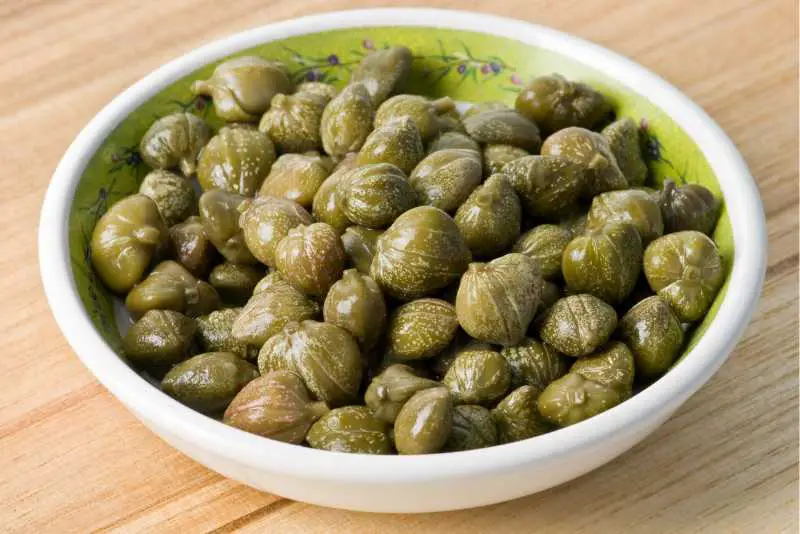
Capote capers are larger than nonpareil capers. They still have that same salty, tangy caper flavor, but the bigger size makes them more noticeable in both texture and appearance.
That can be a good thing if you want the capers to stand out instead of disappearing into the background.
Capote capers are a better fit for:
- dishes where capers stay whole
- salads
- fish dishes
- spreads or toppings where texture matters
- anything where you want a more obvious caper bite
If you chop them up, the size difference matters less.
Capote vs Nonpareil Capers: What’s the Difference?
The biggest difference between capote vs nonpareil capers is size.
Nonpareil capers are smaller and a little more delicate. Capote capers are larger and more obvious in the dish. Because of that, nonpareils are usually better when you want capers to blend in, while capotes work better when you want them to stand out.
The flavor difference is there, but it is not huge. This is not one of those ingredient swaps that completely changes a recipe. In most cases, the bigger difference is texture and how strong the capers feel in each bite.
Which Capers Should You Buy?
If you are only buying one jar, buy nonpareil capers.
They are the most versatile option, and they work well in most recipes without requiring much thought. They are easy to use, easy to scatter into sauces, and less likely to overpower a bite.
Buy capote capers if:
- You already know you like capers
- You want a stronger caper presence
- You are making something where the capers will stay whole and visible
For most people, nonpareils are the all-purpose choice and the better place to start.
Do You Need to Rinse Capers?
Usually, yes, or at least give them a quick drain.
Capers are packed in brine, and that liquid can be aggressively salty. A quick rinse helps take the edge off and gives you a little more control over the seasoning in your dish.
You do not have to scrub them like potatoes. Just a quick rinse under cold water is enough.
When the Difference Actually Matters
This is the part I think gets overcomplicated online.
If you are making a sauce, dressing, or something where the capers are chopped up, the difference between capote vs nonpareil capers is not a crisis. Use what you have.
If you are topping fish, folding them into a salad, or leaving them whole in a dish where texture matters, that is when size matters more.
So if you are standing in the store wondering whether this choice will make or break dinner, the answer is no. It is not that serious. Buy nonpareil if you want the safe all-purpose option. Buy Capote if you want a bigger caper presence.
Final Thoughts
Capote and nonpareil capers are more alike than they are different. Both bring salt, brine, and sharpness to a dish. The main thing you are choosing between is a smaller, more subtle caper or a larger, more noticeable one.
If you want the simplest answer, here it is: buy nonpareil capers for general cooking, and buy capote capers if you want the capers to stand out more.